#099 Basics of Automation Parts Machining - 1 : Relationship of Automation Equipment Costs and Designs
For the automation systems designers, abilities to determine the shapes of parts based on their intents and purposes at the time of designing. If the designer's level of understanding on machining methods is low, the part production costs can be unnecessarily high or he/she may end up designing parts that cannot be produced.
Machining methods and machining technology basics are explained below.
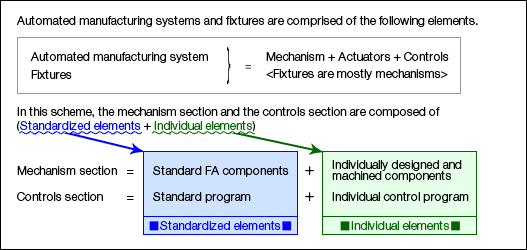
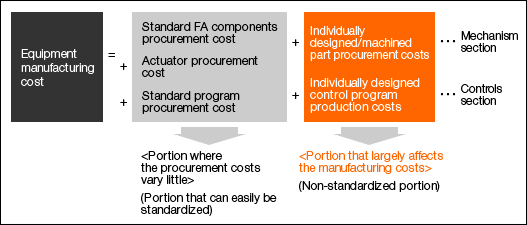
The latter costs shown above of individually designed and machined parts and the individually designed produced control programs occupy a large portion of the production costs on automated manufacturing systems and fixtures. Furthermore, since the workmanship quality of the individually produced elements largely affects the assembly efficiency, the final costs of the finished products are largely affected.
Therefore, the individual element portion is the area where the designer's abilities can really shine.
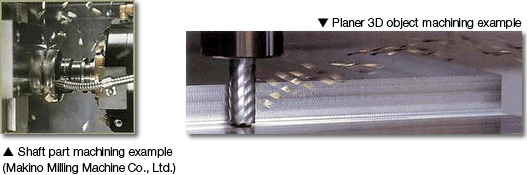
The individually designed and machined parts tend to be more difficult to machine since the special parts are designed to fill specific needs for the system or the fixtures and are not available off the shelf.
- Technical issues of individually designed and machined parts
- Many are of complex shapes
- Many are with specified dimensional tolerances
- They are to be made of special materials (high hardness, non-metals such as plastics and ceramics)
Seasoned designers would proceed with the designs by estimating the rough machining costs per the machining methods to be used.


- Positioning technology
- Designing and processing
- Sensor Technology
- Automation elements technology
- Clean room technology
- Design hints
- Design tips
- Designing and Machining
- Drive mechanism design
- Hints on designing
- Linear Motion Components
- Locating Technology
- Manufacturing technology
- Motion mechanism design
- Pneumatic Drives
- Production Technology
- Technology Outlook
- General description
- Low-cost automation and materials
- Transfer LCA

- #333 Know-how on automation: Pressurized heating technology - 5: Multilayer pressurized heating process technique
- #332 Know-how on automation: Pressurized heating technology - 4: Points to remember when designing mechanism of pneumatic pressurization method
- #331 Know-how on automation: Pressurized heating technology - 3: Pneumatic pressurization method and pressure profile
- #330 Know-how on automation: Pressurized heating technology - 2: Pressurization method and pressure profile
- #329 Know-how on automation: Pressurized heating technology





Please visit your Regional MISUMI website for additional information or to request our latest catalog.

Unauthorized reproduction is prohibited by all applicable laws and is subject to criminal prosecution.