July 2012 Archives

#131 Compression Molding Method

| No Comments | No TrackBacks

Compression molding is a method of molding used for molding thermoset plastic resin. Thermoset plastic resin are liquid at room temperature, but solidify upon heating, and once solidified, they remain permanently solid. The hardening is considered to be due to a chemical reaction called cross-linking.
Typical thermoset plastic resin are phenol resin, melamine resin, urea resin, epoxy resin, etc.

The compression molding method is a classical method of molding which has been in use ever since plastic resins were invented.
Male and female molds are prepared, the molding resin is loaded inside the female mold, the male mold is closed, and the set of molds is heated thereby solidifying the plastic resin and preparing the molded article.
At the time of closing the male mold, excess resin overflows from the parting surface and becomes burrs. These burrs are removed after molding. (Fig. 1)
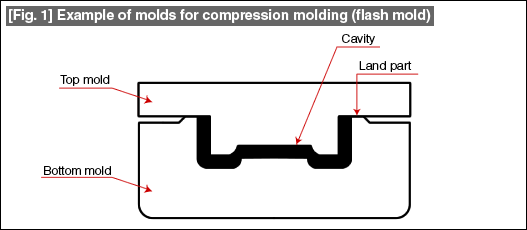
Fig. 1 Example of molds for compression molding (flash mold)

Compression molding is being used even now for food utensils such as plates, bowls, etc., electrical insulating parts, decorative buttons, etc.
Since thermoplastic materials cannot be used in environments where they are heated or where resistance to chemicals is required, thermoset plastic resin are used in such situations.

The mold structures of the three types:
1. Positive type mold
2. Flash type mold
3. Semi-positive type mold.
The semi-positive type mold is used most often.

Although the guidelines for the molding shrinkage ratios of typical plastic resins were explained in the last lesson, we would like to add some more information. This time, we provide the values for some engineering plastics resins.

The table shows the major thermoplastic resins and their molding shrinkage ratios, cavity surface temperatures, and injection molding pressures. For more details, it is common to obtain the material catalogs or technical documents for each material grade from the manufacturer of the material, and to use them as the documents for making decisions.

* The values given here are for natural resins unless otherwise stated.

Table of molding shrinkage ratios of major plastic resins (2)

Name of plastic resin Molding shrinkage ratio (%) Cavity surface temperature (°C) Injection molding pressure
(kgf/cm2) (MPa)
Polyamide
(Nylon 6) PA6
0.5 - 1.5 40 - 120 350 - 1400 34.34 - 137.4
Polyamide
(Nylon 66) PA66
0.8 - 1.5 30 - 90 350 - 1400 34.34 - 137.4
Polyacetal POM 2.0 - 2.5 60 - 120 700 - 1400 68.69 - 137.4
Polybutylene terephthalate PBT
30% glass fiber
0.2 - 0.8 40 - 80 560 - 1800 54.95 - 176.6
Polycarbonate PC 0.5 - 0.7 80 - 120 700 - 1400 68.69 - 137.8
Polyphenylene sulfide PPS 40% glass fiber 0.2 - 0.4 130 - 150 350 - 1400 34.34 - 137.8
Liquid crystal polymer LCP 40% glass fiber 0.2 - 0.8 70 - 110 700 - 1400 68.69 - 137.8

About this Archive

This page is an archive of entries from July 2012 listed from newest to oldest.

June 2012 is the previous archive.

November 2012 is the next archive.

Find recent content on the main index or look in the archives to find all content.